
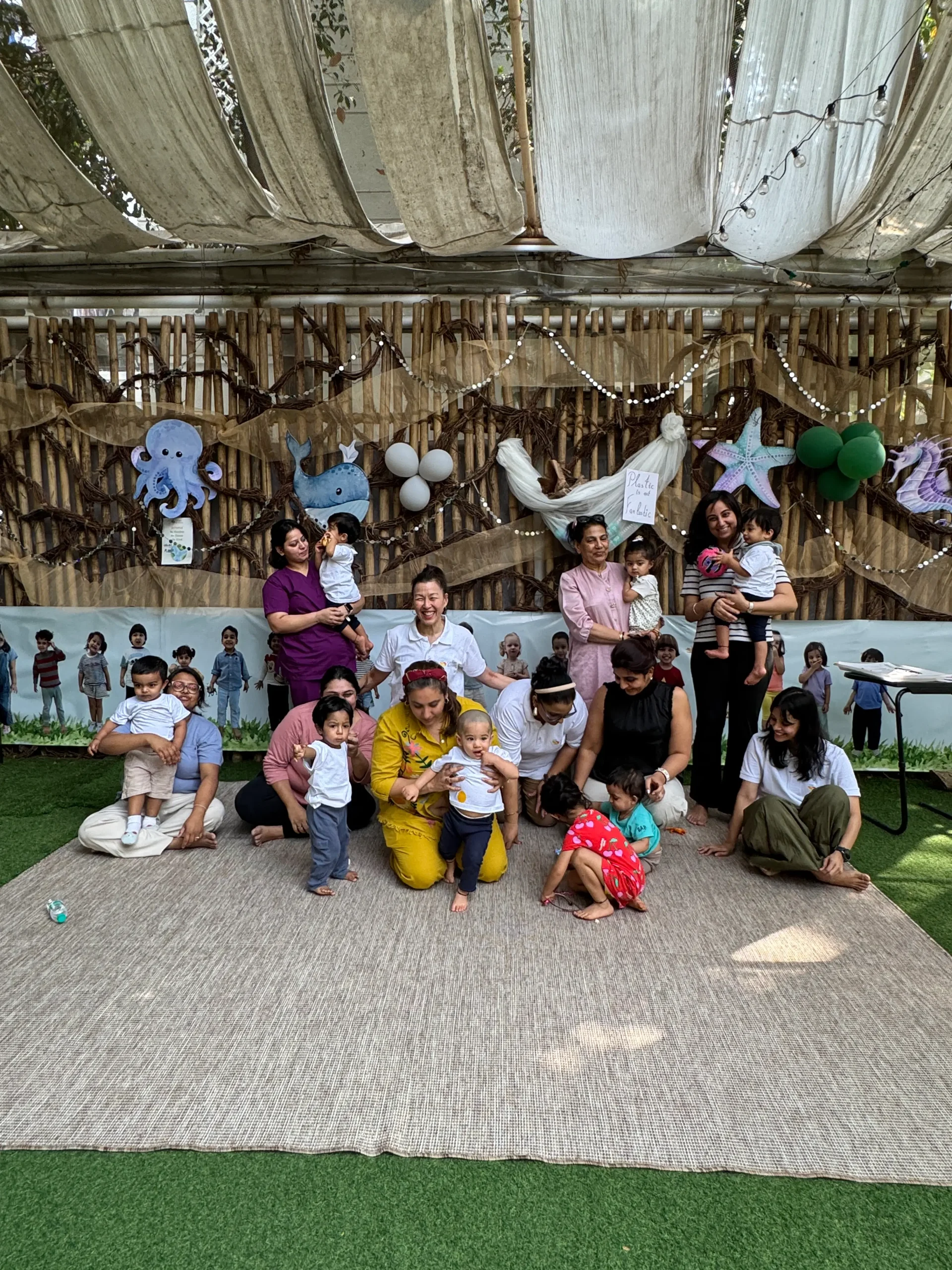
At Circles & Cycles, we believe that young children learn first through their bodies. Before language, before structured learning, babies understand the world through movement, touch, balance, and connection. That’s why our school includes a unique program called Intentional Movement and Play, where an occupational therapist works alongside our facilitators to support children’s sensory, motor, and self-regulation development during the earliest years.
Occupational therapy in infancy is not about correction or intervention; it is about nurturing the natural foundations of development. Through carefully designed environments and playful experiences, babies build strength, coordination, body awareness, and the ability to feel calm and organised in their bodies.
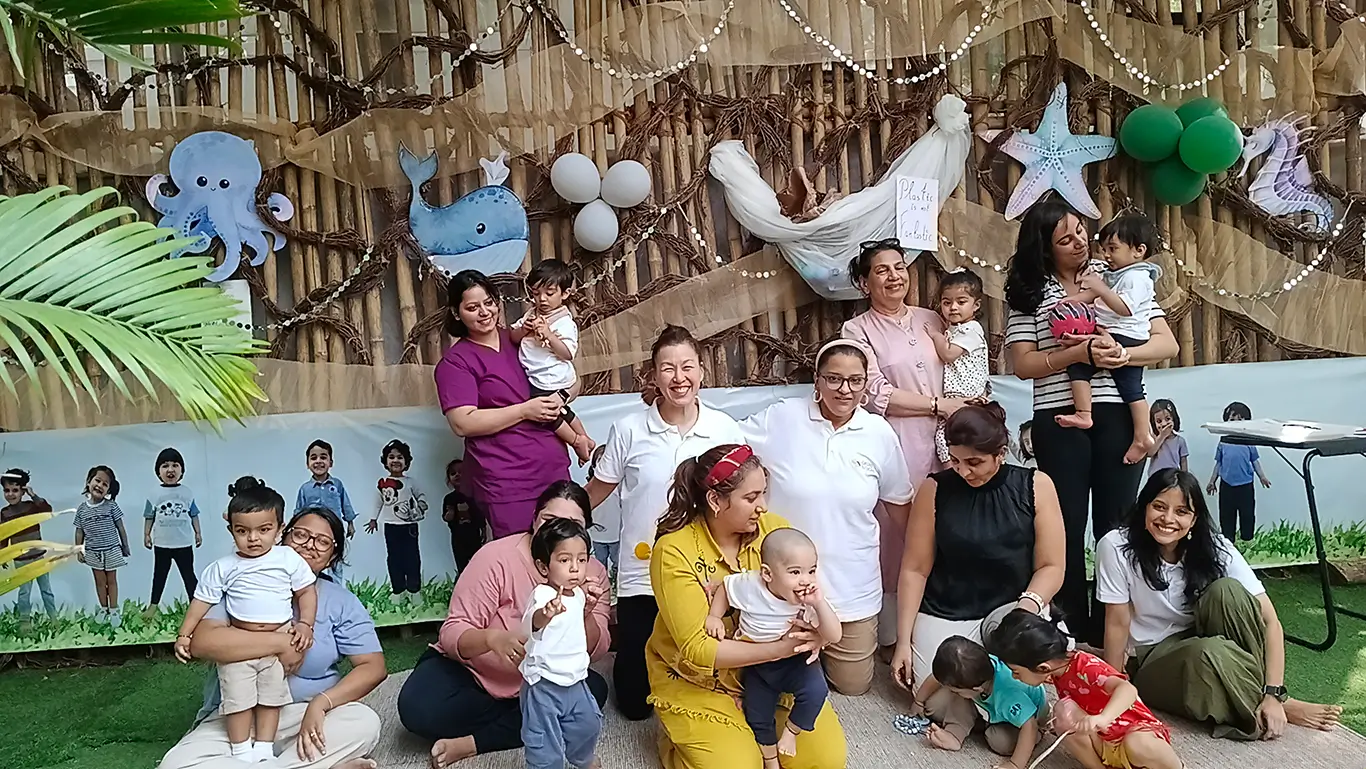
To celebrate this program, we hosted a special Movement Day at our preschool. The experiences were simple, joyful, and deeply purposeful, designed to support how babies naturally learn: by rolling, crawling, reaching, climbing, and connecting with the people around them. The activities below offer a glimpse into how play, movement, and sensory exploration quietly shape your baby’s development during the first year of life.
With babies, Movement Day looks very different. No one is lining up or following instructions. Babies are rolling, crawling, touching, watching, being held, and sometimes just lying quietly. And that is exactly how learning is meant to look at this age.
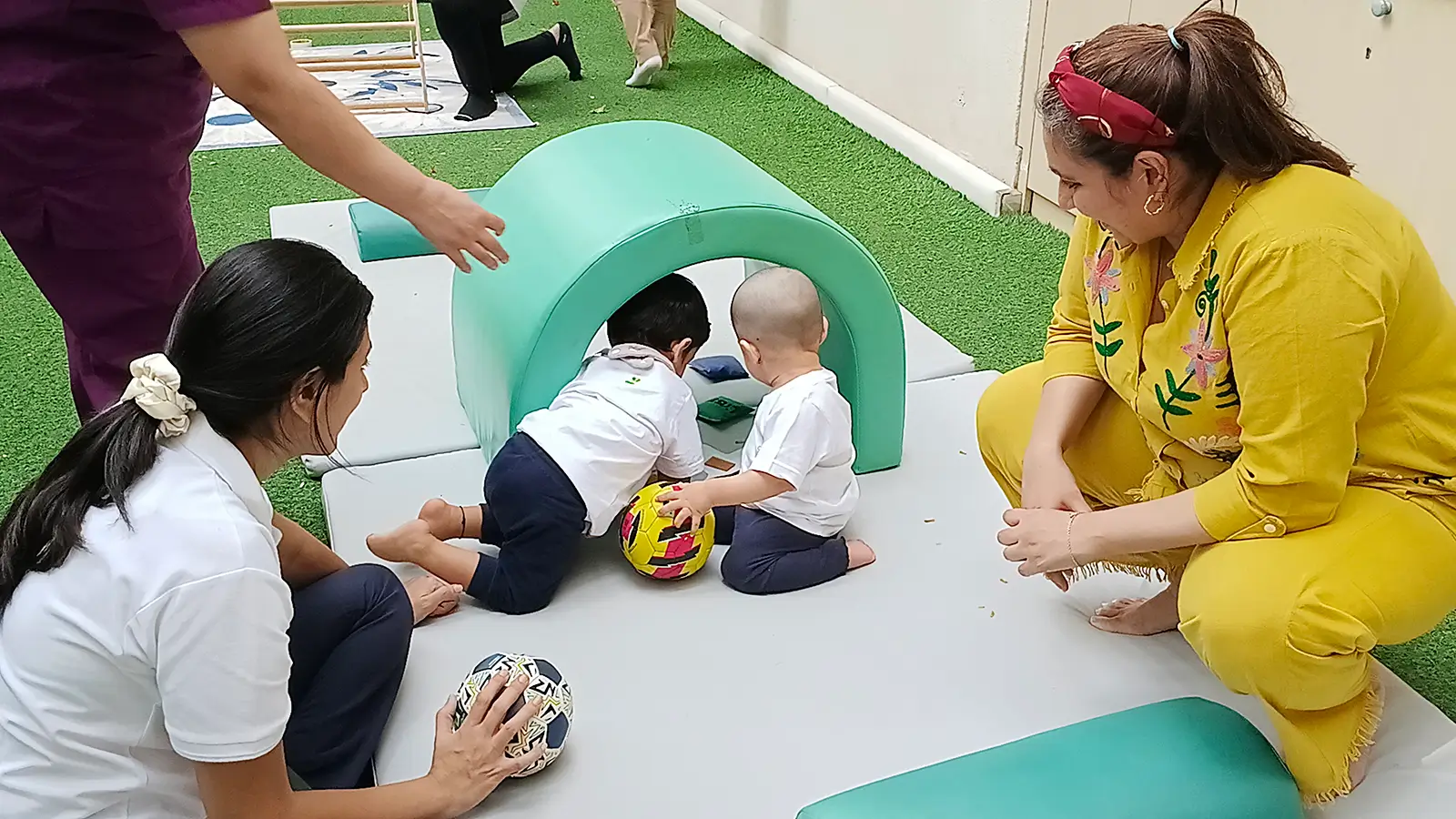
Between 6 and 12 months, your baby is learning about the world through their body and through you. Movement, touch, and connection are building their brain in powerful ways.
When your baby moves on the floor like this, they are building core strength needed for sitting, crawling, and later walking. They’re learning to use both sides of their body and to shift their weight.
Over time, this supports walking, climbing, and confidence in exploring playgrounds and new environments. Floor movement now lays the foundation for future coordination.
Helping Hands in Motion
Climbing on a Pikler and rescuing little ducks
Climbing at this age is about discovery and body confidence. Your baby is strengthening their arms, legs, and trunk while learning how to balance and reach.
Later on, this supports safer climbing, better coordination, and confidence in trying new physical challenges.
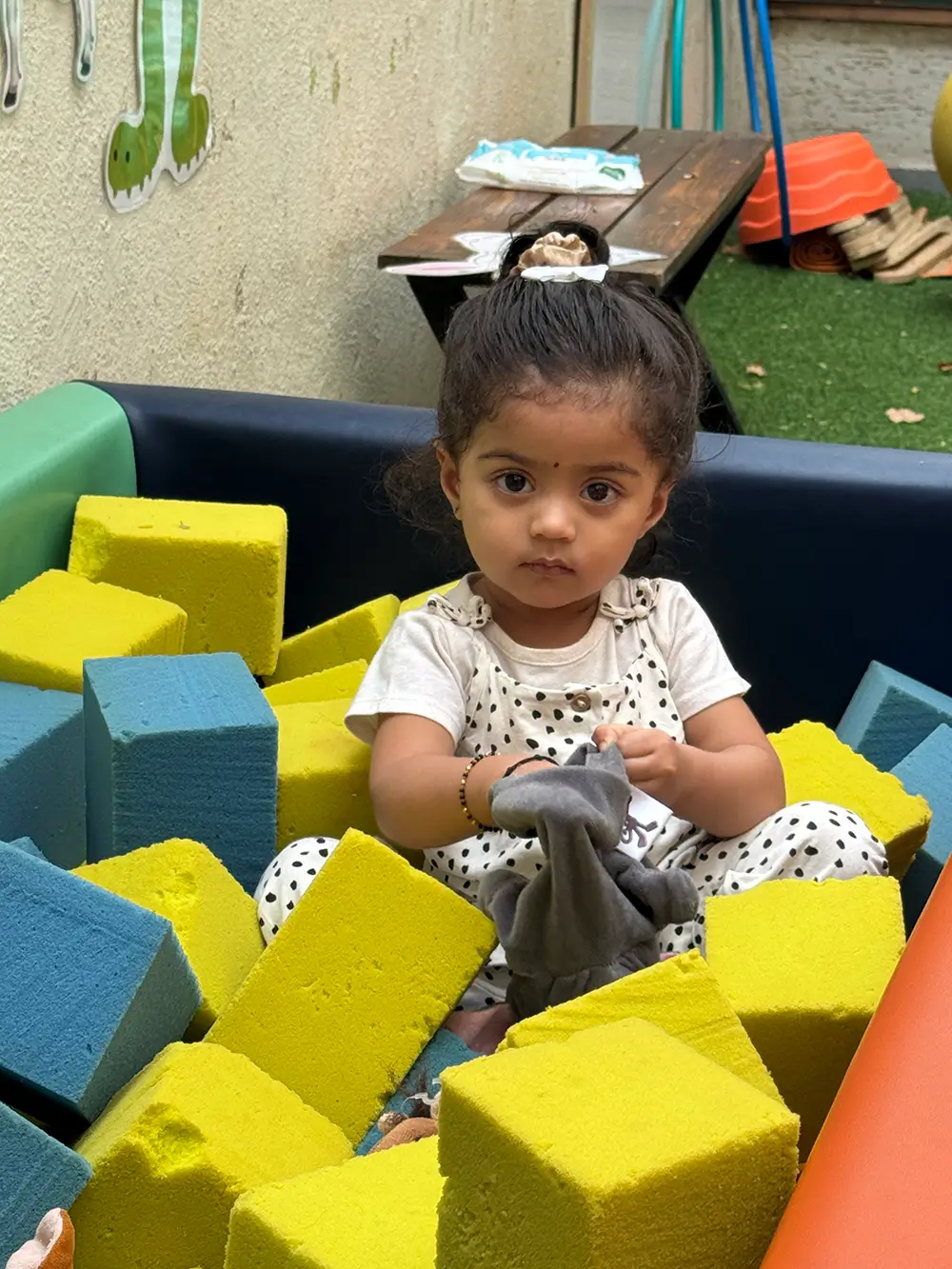
Animal Rescue Pit
Moving through soft sponges to find animals
The soft resistance gives strong feedback to your baby’s muscles and joints, helping them understand where their body is. It’s also very calming and organising.
These experiences support body awareness, coordination, and emotional regulation. They help babies feel secure in their bodies and better able to handle busy environments later.
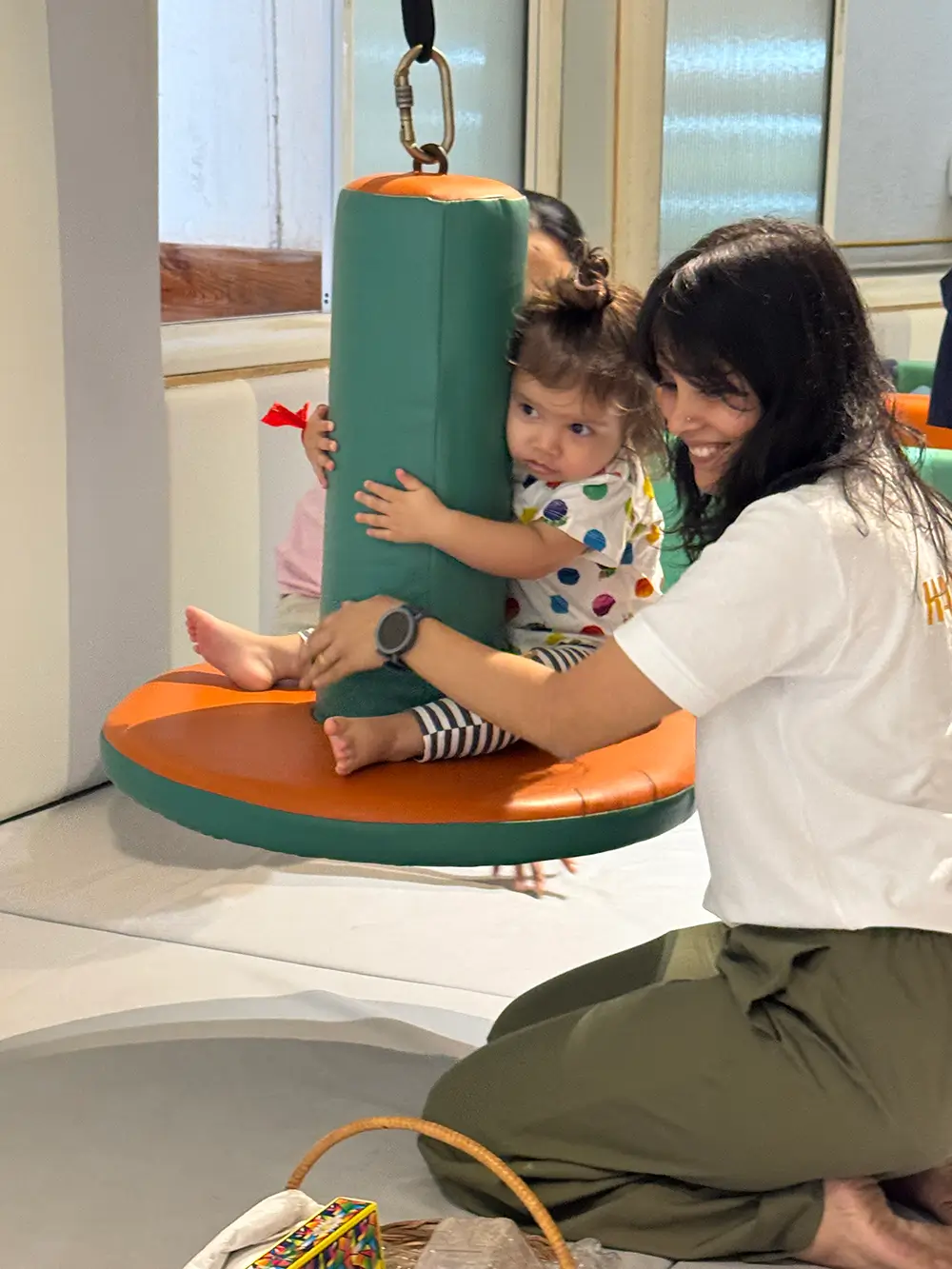
Mindful Movers
Gentle swing movement and placing balls in a box
Your baby is learning to balance while moving and to use their eyes and hands together. They’re also learning to stay engaged in a task while their body feels motion.
This supports focus, fine motor skills, and comfort with movement as they grow.
Textured Path
Crawling across different surfaces
Babies learn through touch, especially through their hands and feet. Feeling different textures helps them build sensory awareness and adjust how they move.
Over time, this supports balance on varied surfaces and comfort with new sensations and environments.
Quiet Nest
A calm space with books and cushions
Sometimes babies need a break from stimulation. Sitting with you, looking at a book, or just resting helps them calm and feel safe.
These moments support emotional security, attention, and early regulation skills that matter deeply in busy settings later on.
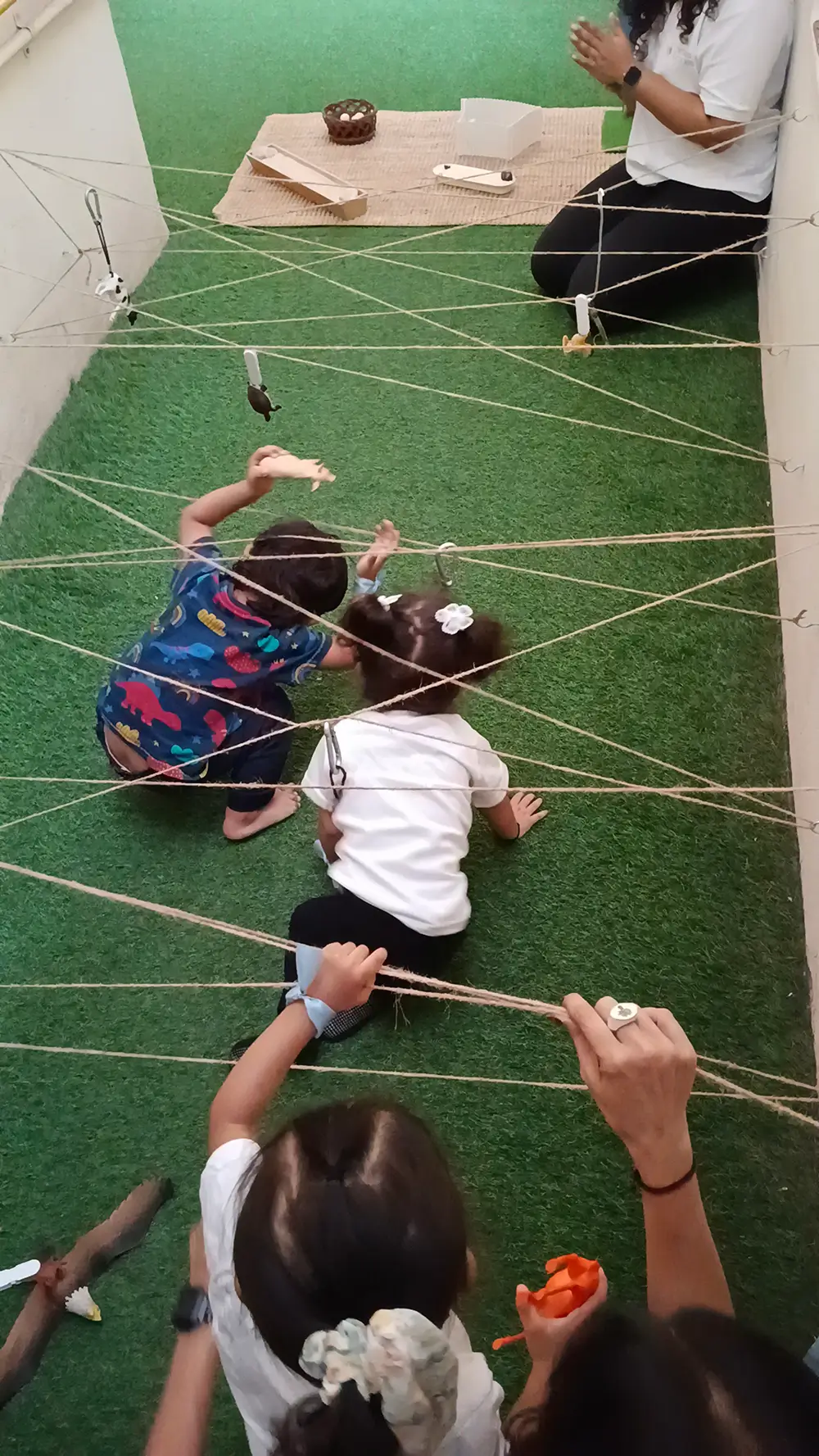
Parent Engagement Play
Rolling balls and shared play
Your baby learns most through interaction with you. Watching, responding, and sharing attention builds communication, social skills, and a strong sense of safety.
At this age, development doesn’t come from teaching. It comes from moving, exploring, feeling, and connecting. These simple-looking moments are building strong bodies, organised sensory systems, emotional security, and curiosity about the world.