
A baby drops a spoon again and again.
A toddler moves their whole body to music.
A preschooler spends 30 minutes building and rebuilding the same structure.
Are they just playing, or are they communicating something important?
The Reggio Emilia philosophy suggests we view these moments as meaningful expressions. Long before children can communicate clearly through words, they are already sharing ideas, asking questions, and making sense of the world around them.
This is where the Reggio Emilia concept of the “100 languages of children” becomes powerful, not just as a philosophy, but as a practical lens for both parents and facilitators.
For parents, it offers a way to better understand your child:
- What is my child trying to tell me through their actions?
- Why does my child repeat certain behaviours?
- How can I respond in a way that supports their thinking?
For facilitators, it deepens pedagogical practice:
- How do we observe and interpret children’s thinking beyond words?
- How do we design environments that invite expression?
- How do we value process over product?
As Loris Malaguzzi (Malaguzzi, 1994) emphasised, children are not empty vessels waiting to be filled; they are rich in ideas, curiosity, and ways of expressing them.
The “100 languages” reminds us of something fundamental:
Children are always communicating. We need to learn how to listen.
What Exactly Are the “100 Languages”?
The “100 languages” is a poetic way of describing the many ways children make meaning:
- Movement
- Drawing and mark-making
- Building and construction
- Music and rhythm
- Dramatic play
- Sculpting, arranging, combining materials
- Gesture, gaze, silence
These are not “extra” activities. They are how thinking happens.
From Babies to Preschoolers: How Expression Evolves
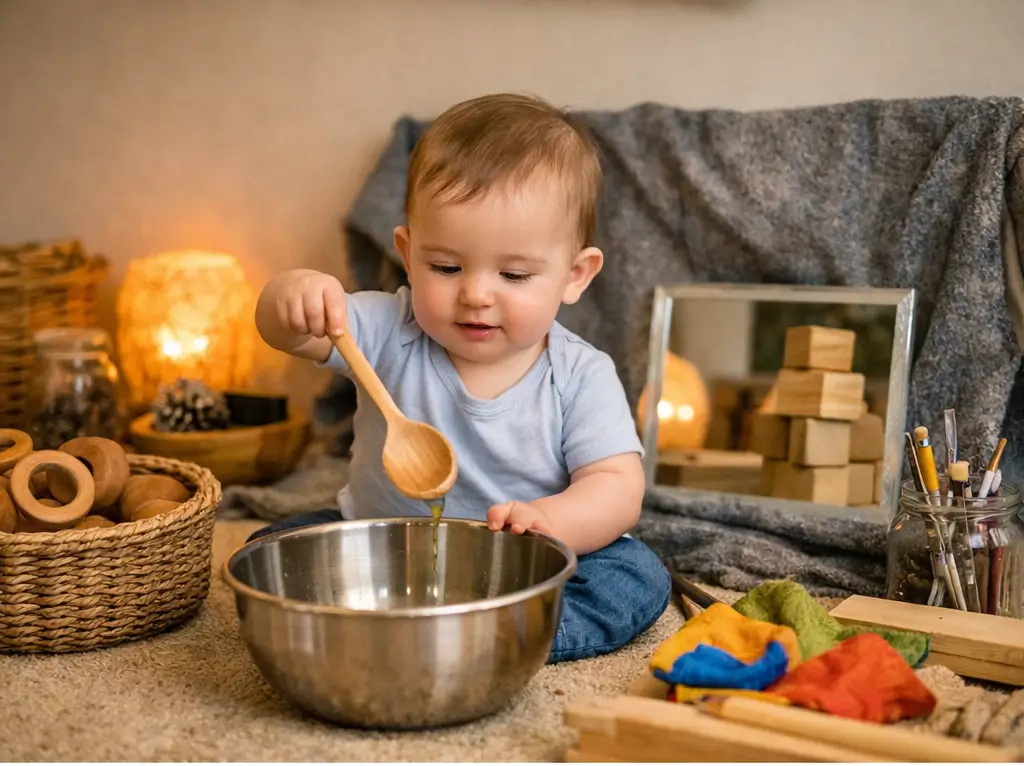
6–12 months: The Language of the Body
A baby explores through:
- Repetition (dropping, banging, mouthing)
- Sensory engagement (touching textures, watching movement)
- Eye contact and gesture
These are early forms of hypothesis-making: What happens if I do this again?
1–2 years: The Language of Action
Toddlers begin to:
- Transport objects
- Stack, fill, empty
- Use their whole body to explore space
Movement, here, is not random; it is structured thinking through action.
2–3 years: The Language of Symbol
Now we begin to see:
- Pretend play
- Early drawing and mark-making
- Representing ideas through objects
A block becomes a phone. A scribble becomes “mummy.”
3–4 years: The Language of Representation
Preschoolers expand into:
- Detailed constructions
- Storytelling through multiple media
- Combining drawing, building, and dramatic play
They are not just expressing. They are refining ideas across languages.
For Parents: Why This Matters
When we focus only on verbal communication or early academics, we risk missing the depth of children’s thinking.
A child who:
- Spends 20 minutes arranging stones
- Repeats the same movement again and again
- Builds and rebuilds a structure
…is not “just playing.”
They are:
- Testing ideas
- Exploring relationships
- Constructing meaning
As highlighted in Reggio-inspired practice, children use symbolic languages to “construct meaning about themselves and the world.”
What you can do at home:
- Offer open-ended materials (boxes, fabrics, natural objects)
- Allow time for repetition
- Observe before intervening
- Value the process, not just the outcome
For Facilitators: Deepening Practice
The idea of 100 languages fundamentally shifts our role.
We are not delivering learning. We are interpreting expressions, using these interpretations to design thoughtful provocations.
1. Observation as Pedagogy
Children’s languages are subtle.
A repeated action, a drawing, a gesture ⇒ these are data.
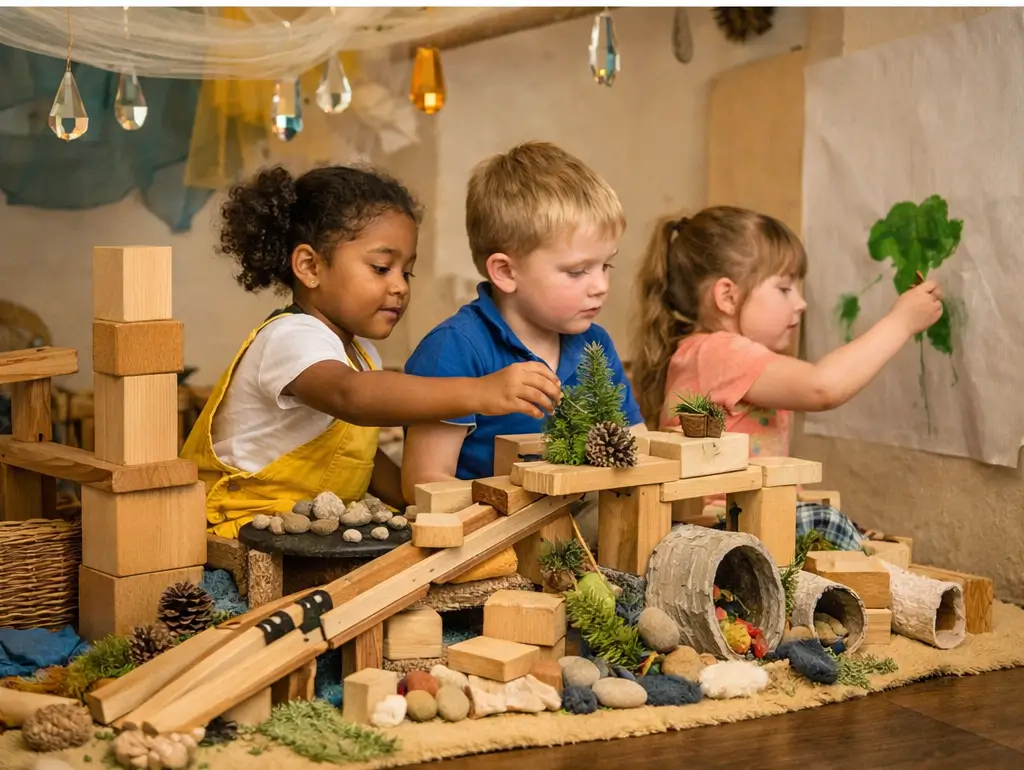
2. The Environment as a Language System
Materials are not neutral. They shape how children express and think.
- Clay allows pressure and transformation
- Loose parts allow metaphor
- Light and shadow invite abstraction
Carefully curated environments act as invitations for expression, or “provocations” that spark thinking and exploration (Hedger, 2022).
3. Moving Beyond “Art as Product”
Art is not an activity. Reggio Emilia facilitators view art as a mode of thinking.
As Massey (Massey, 2017) explains, art should be understood as a behaviour: a way of organizing, expressing, and constructing meaning, not simply producing something to take home.
4. Valuing Process Over Outcome
Children want their effort seen, not just the final product.
Observing the process:
- Reveals thinking
- Builds relationships
- Validates the child’s identity as a learner
This aligns with Malaguzzi’s emphasis that children want to be seen while they are working, (Malaguzzi, 1994) not just at the end.
The Role of the Adult: Speaking Many Languages Too
If children have 100 languages, so must we.
- Listen without rushing to interpret
- Offer materials instead of answers
- Ask questions instead of giving solutions
- Be co-learners, not instructors
This requires comfort with uncertainty. Learning is a spiral (Gandini, 2003), constantly revisited and re-expressed.
A Final Reflection
What if we began to see every action as communication?
- The child moving endlessly across a room.
- The toddler filling and emptying a basket.
- The preschooler drawing the same shape again and again.
- These are not phases to move through quickly.
- They are languages to be listened to deeply.
And when we begin to listen, truly listen, we discover something powerful:
- Children are not waiting to be taught how to think.
- They are already thinking richly, creatively, and in a hundred different ways.